Bitcompare

Footer

Bitcompare

Independent crypto interest rate comparison since 2018.

Rates

  • Stablecoin Yields
  • Lending Rates
  • Staking Rewards
  • Borrowing APRs
  • Assets
  • Providers
  • Historical Rates

Popular comparisons

  • USDT lending rates
  • USDC lending rates
  • Bitcoin lending rates
  • XRP lending rates
  • Stablecoin staking
  • Stablecoin lending

More comparisons

  • Ethereum staking
  • Solana staking
  • TRON staking
  • XRP staking
  • USDT loan rates
  • PAX Gold lending rates

Trust

  • Methodology
  • Coverage
  • Risk warning
  • Sponsored disclosure

Company

  • About
  • News
  • How-to
  • Contact

For developers

  • Yield API
  • MCP
  • API Docs
PrivacyTermsAdvertising disclosureEditorial processRisk warning

Blue Venture Studios Pty Ltd · 12 Avoca Street, Bondi, NSW, 2026, Australia

© 2026 Bitcompare

Advertising disclosure: Bitcompare is a comparison engine that relies on advertising for funding. The business opportunities that can be found on this site are offered by companies with which Bitcompare has made deals. This relationship may affect the way and where products appear on the site, such as in what order they are listed in categories. Information about products may also be placed based on other factors, such as the ranking algorithms on our website. Bitcompare does not look at or list all companies or products on the market.

Editorial disclosure: The editorial content on Bitcompare is not provided by any of the companies mentioned, and has not been reviewed, approved, or otherwise endorsed by any of these entities. The opinions expressed here are the author's alone. Additionally, the opinions expressed by the commenters do not necessarily reflect those of Bitcompare or its staff. When you leave a comment on this site, it will not show up until a Bitcompare administrator approves it.

Warning: The price of digital assets can be volatile. The value of your investment can go down or up, and you may not get back the amount invested. You are the only one who is responsible for the money you invest, and Bitcompare is not responsible for any losses you might have. Any APR shown is a rough estimate of how much cryptocurrency you will earn in rewards over the time period you choose. It does not display the actual or predicted returns or yields in any fiat currency. The APR is adjusted daily, and the estimated rewards may differ from the actual rewards generated. The information on this page is not meant to be a sign from Bitcompare that the information is correct or reliable. Before making any investment, you should carefully consider your investment experience, financial situation, investment objectives, and risk tolerance, and consult with an independent financial advisor. Links to third-party sites are not under the control of Bitcompare, and we are not responsible for the reliability or accuracy of such sites or their contents. For more information, see the Terms of Service for Bitcompare and our Risk Warning

  1. Bitcompare
  2. Coins
  3. TRON (TRX)
  4. Lending Rates

TRON Lending Guide

  • How to lend TRON
  • Crypto lending guide

Stablecoin Interest Rates

Compare live lending, staking, and borrowing rates for USDT, USDC, DAI, and other major stablecoins across top platforms.

Up to 74% APY · 17 stablecoins

Compare Stablecoin Rates →
NexoSponsored
Earn High Yields on Your Crypto with Nexo
  • Daily compounding interest
  • No lock-up periods, withdraw anytime

Popular Coins to Lend

  • Bitcoin logoBitcoinBTC
  • Ethereum logoEthereumETH
  • Tether logoTetherUSDT
  • USD Coin logoUSD CoinUSDC
  • Solana logoSolanaSOL
  • BNB logoBNBBNB
  • XRP logoXRPXRP
  • Cardano logoCardanoADA
  • Dogecoin logoDogecoinDOGE
  • Polkadot logoPolkadotDOT

Stablecoins

  • Tether logoTetherUSDT
  • USDC logoUSDCUSDC
  • Dai logoDaiDAI
  • PayPal USD logoPayPal USDPYUSD
  • USDD logoUSDDUSDD
TRON logo

TRON (TRX) Lending Rates

Find the best TRX lending rates and earn up to 11% APY. Compare 3 platforms side-by-side.

11% APY
Highest Rate
Updated: November 21, 2026

Disclaimer: This page may contain affiliate links. Bitcompare may be compensated if you visit any links. Please refer to our Advertising disclosure.

The best TRON lending rate is 11% APY on YouHodler.. Other top platforms include Nexo (11% APY) and JustLend (0.42% APY). Compare TRX lending rates across 3 platforms.

  • YouHodler 11%
  • Nexo 11%
  • JustLend 0.42%

Compare TRON (TRX) Lending Rates

10 / 3

Showing 10 to 3 of 3 results

PreviousNext

Historical TRON lending rates (the United States)

Rates shown are the headline rates we track for the United States users; actual rates may vary by product, tier, or terms.

Loading chart...
Chart comparing rates for OKX, Nexo, YouHodler, JustLend over the past 30-day

OKX currently offers the highest TRON lending rate in the United States at 78.47% APY, slightly below its 30-day average of 99.57%.

30-DAY AVERAGE RATESArrows compare today vs 30-day average

ProviderCurrent RateTrendAverage Rate
OKX
78.48%avg 99.57%
Nexo
11%avg 8%
YouHodler
11%-avg 11%
JustLend
0.42%-avg 0.41%
Best 30-day averageOKX (99.57% APY)
Last updated: Nov 21, 2026, 10:30 PM

Platform Safety Information

We evaluate each platform's regulatory status, transparency, and track record.

PlatformRegulatory StatusProof of ReservesTrack RecordInsurance
NexoEU (VARA Dubai, Multiple VASPs)2024-12 (Armanino)Has issuesCustodial insurance
How we gather this information

Need programmatic access to this data?

Get real-time yield rates via the Bitcompare Pro API. 10,000 requests/month free.

Explore the crypto yield API

Frequently Asked Questions About TRON (TRX) Lending

What is TRON (TRX) and what is its primary purpose?
TRON (TRX) is a blockchain-based platform designed to enable high-throughput, decentralized applications (dApps) and content sharing. Its core aim is to give developers and content creators more control and lower costs by removing intermediaries. TRX is used for network fees, staking, governance participation, and as a means of transferring value within the TRON ecosystem. The project emphasizes scalable, fast transactions and a user-friendly experience for developers building decentralized apps and services on the TRON network.
How can I buy and store TRX safely?
To buy TRX, you can use major crypto exchanges that list TRX pairs with fiat or other cryptocurrencies. After purchasing, transfer your TRX to a secure wallet you control. For storage, you have options: software wallets (mobile or desktop) for convenience, and hardware wallets (like Ledger or Trezor) for enhanced security. If using a hardware wallet, ensure you follow the device’s setup steps and back up your recovery phrase offline. Always enable additional security features (2FA on exchange, strong wallet passphrases) and consider separate funds for trading vs. long-term holdings.
What are recent price trends and market considerations for TRX?
TRX trades with a fluctuating price influenced by overall crypto markets, TRON network updates, and user adoption. As of the latest data, TRX showed a modest daily movement with a small percentage decrease. When evaluating TRX, consider its market cap, circulating supply (about 94.7 billion TRX), and the pace of network activity. Use reliable price feeds and track 24-hour changes, trading volume, and liquidity on your preferred exchange. Remember that crypto prices can be volatile and influenced by broader market sentiment, regulatory news, and project developments.
What are some practical use cases and latest developments on the TRON network?
TRON focuses on content distribution, dApps, and smart contracts with a goal of reducing frictions and costs for creators. Use cases include decentralized entertainment apps, gamefi, NFT platforms, and social media-type services built on TRON’s framework. The network has pursued improvements in throughput and user experience, with ongoing ecosystem expansion and partnerships. Developers can deploy smart contracts in Solidity-compatible environments, leverage TRON’s Virtual Machine, and access tools for building scalable dApps. Staying updated with the official TRON blog and developer portal helps you track new features and integrations.
Is TRX suitable for staking or governance participation, and how does that work?
TRX can be used in ecosystem activities that involve staking or participating in governance-like processes within the TRON network. Staking TRX may contribute to network security, voting power, or eligibility for certain rewards or opportunities within specific dApps. The exact mechanics can vary by platform or product within the TRON ecosystem, so it’s important to consult the official TRON documentation or the particular service you’re using. If you’re interested in governance, look for official proposals, voting windows, and the requirements to participate. Always verify instructions from reliable sources to ensure you’re using legitimate channels.

TRON TRX News

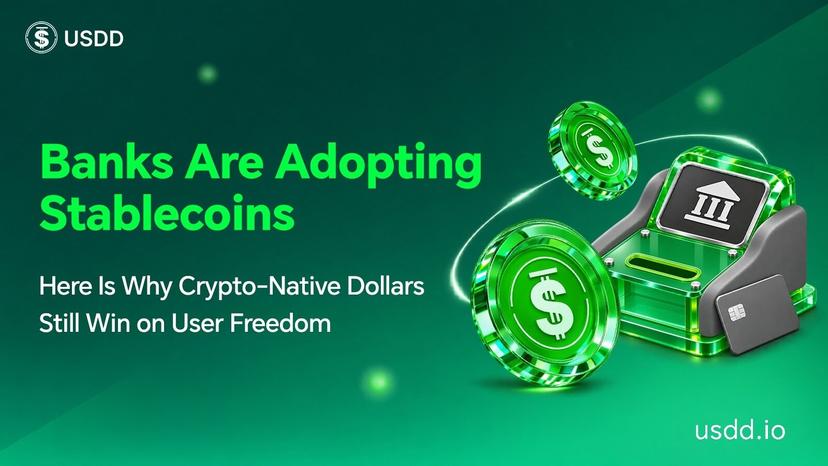
As traditional giants rush into digital dollars, USDD’s Yvonne Chia explains why 24/7 access, self-custody, and transparent yield give decentralized stablecoins an edge banks can’t replicate. 20 November – Road Town, Totorla, British Virgin Islands – Decentralized stablecoin protocol USDD is accelerating its multichain utility across TRON, Ethereum, and BNB Chain—combining automated sUSDD yield via its Smart Allocator with GasFree zero-TRX transfers—as traditional financial giants race to build competing stablecoin rails. In a recent industry interview with instant exchange partner ChangeNOW, USDD Head of Communications Yvonne Chia outlined why self-custody, 24/7 settlement, and transparent onchain reserves give decentralized digital dollars a structural advantage over bank-issued alternatives. 1. Permissionless Access vs. Gatekept Accounts For billions of people globally, opening and maintaining a traditional bank account still involves paperwork, minimum balance requirements, geographic restrictions, and approval delays. Even when banks integrate stablecoin rails behind the scenes, those services remain gated behind legacy compliance walls and intermediary control. Crypto-native stablecoins flip that model on its head. As Yvonne Chia highlighted during the interview: "Compare this to a stablecoin like USDD, where all you need is a phone, a working internet connection, you can immediately start a wallet and you have access to your funds right away." With USDD, users can access and manage their digital dollars directly through their own wallets, without depending on traditional financial intermediaries. This represents a fundamental shift in financial access: users are no longer limited to the services, operating hours, or account structures of a single institution. Instead, they have the freedom to hold, manage, and transfer their assets on their own terms. Self-custody also gives users greater autonomy over their financial decisions. They can choose which wallets to use, where to transfer their assets, and which supported decentralized applications to interact with, without needing to route every transaction through a centralized financial institution. With USDD, users’ digital dollars can move with them across an open blockchain ecosystem, rather than remaining tied to a particular bank or service provider. 2. 24/7 Global Settlement vs. "Banking Hours" Legacy payment networks still operate on decades-old schedules: weekend cutoffs, bank holidays, and multi-day cross-border settlement delays accompanied by hefty wire fees. Blockchain networks never close. Whether it is a Sunday night or a public holiday, USDD moves globally without depending on traditional banking operating hours or settlement windows. "We are able to have transfers 24/7 and we're not limited to any traditional banking hours. So I think that in some ways, stablecoins are not just becoming banks, but exceeding what traditional banks can offer to users." To make everyday transfers even smoother than fintech apps, USDD introduced GasFree integration on TRON, allowing users on supported wallets to pay network fees directly in USDD without needing to hold TRX. This removes another practical barrier to stablecoin adoption: having to acquire and maintain a separate gas token just to transfer digital dollars. With GasFree, eligible users can pay approximately 0.5 USDD per transaction, compared with around 1.5 USDT for a standard USDT transfer under the referenced fee conditions. These improvements matter because the usefulness of a stablecoin is not determined by its peg alone. Low-cost transfers, straightforward wallet experiences, and around-the-clock availability are what make digital dollars practical for everyday payments and global value transfers. 3. Passing Yield Back to Users vs. Bank Spreads Perhaps the sharpest contrast between banks and decentralized stablecoins lies in how yield is distributed. In traditional banking, institutions take customer deposits, deploy them into yield-generating markets, and retain a significant portion of the returns. Everyday depositors may receive relatively low interest rates, while higher-yielding products often come with eligibility requirements, minimum deposits, or fixed maturity periods. Stablecoins introduce another way to participate in digital-dollar opportunities. Rather than keeping capital entirely within a traditional deposit account, users can access onchain yield opportunities through decentralized protocols and transparent investment mechanisms. USDD was built to return that value directly to holders. Through USDD Earn, users can deposit USDD to receive sUSDD, earning automated, competitive yield powered by our Smart Allocator system, with no fixed lock-up periods restricting access to their capital. For users, the distinction is important: USDD Earn provides access to a productive stablecoin while maintaining flexibility, rather than requiring users to commit their capital to a conventional fixed-term product. 4. Onchain Verification vs. Institutional Trust Traditional banks ask customers to trust closed-door balance sheets and periodic regulatory filings—until a crisis proves otherwise. USDD takes a different approach through its "Don't trust, verify" ethos, emphasizing publicly accessible onchain information and independent verification. Onchain Transparency: Smart contract addresses, collateral reserves, and Smart Allocator deployments are publicly viewable, allowing users to examine relevant information directly on the blockchain. Structured Disclosures: Quarterly Treasury Reports provide additional information about reserve positions, financial performance, and operational developments. Independent Security Reviews: USDD undergoes third-party security audits to assess its smart contracts and identify potential vulnerabilities. Transparency does not eliminate financial or technical risks, but it changes how users can evaluate them. Instead of relying exclusively on an institution's assurances, users have access to information that can be independently examined and verified. 5. Beyond a Single Network: An Open, Multichain Financial Ecosystem Financial freedom is not just about holding digital dollars. It is also about being able to use them wherever opportunities and applications exist. A stablecoin confined to a single network or limited use case cannot fully realize the potential of open blockchain finance. Following its January 2025 protocol upgrade, USDD expanded natively from TRON onto Ethereum and BNB Chain, extending its reach across multiple blockchain ecosystems. This multichain presence allows USDD to connect with different communities, liquidity environments, and decentralized applications. Its sUSDD product has also expanded into DeFi integrations, including Pendle and Morpho, giving users additional ways to access yield strategies across supported ecosystems. The bigger picture is an interconnected financial ecosystem in which users can move between holding, transferring, exchanging, and deploying their stablecoins according to their own needs. These are not isolated functions. Together, they make stablecoins more useful as everyday financial infrastructure. The Future: Interconnected, Open, and Multichain Banks will undoubtedly continue using stablecoin rails to modernize their back-end settlement. However, true financial freedom comes from open networks where assets flow freely across protocols without intermediaries. For USDD, the opportunity goes beyond offering a dollar-pegged asset. It is about making digital dollars accessible, transferable, and productive across an interconnected financial ecosystem. From self-custody and 24/7 transfers to flexible yield opportunities and multichain DeFi access, these capabilities give users more ways to put their money to work. Banks may be bringing stablecoins into traditional finance. Crypto-native protocols are showing what stablecoins can make possible beyond it.
November 20, 2026As traditional giants rush into digital dollars, USDD’s Yvonne Chia explains why 24/7 access, self-custody, and transparent yield give decentralized stablecoins an edge banks can’t replicate. 20 November – Road Town, Totorla, British Virgin Islands – Decentralized stablecoin protocol USDD is accelerating its multichain utility across TRON, Ethereum, and BNB Chain—combining automated sUSDD yield via its Smart Allocator with GasFree zero-TRX transfers—as traditional financial giants race to build competing stablecoin rails. In a recent industry interview with instant exchange partner ChangeNOW, USDD Head of Communications Yvonne Chia outlined why self-custody, 24/7 settlement, and transparent onchain reserves give decentralized digital dollars a structural advantage over bank-issued alternatives. 1. Permissionless Access vs. Gatekept Accounts For billions of people globally, opening and maintaining a traditional bank account still involves paperwork, minimum balance requirements, geographic restrictions, and approval delays. Even when banks integrate stablecoin rails behind the scenes, those services remain gated behind legacy compliance walls and intermediary control. Crypto-native stablecoins flip that model on its head. As Yvonne Chia highlighted during the interview: "Compare this to a stablecoin like USDD, where all you need is a phone, a working internet connection, you can immediately start a wallet and you have access to your funds right away." With USDD, users can access and manage their digital dollars directly through their own wallets, without depending on traditional financial intermediaries. This represents a fundamental shift in financial access: users are no longer limited to the services, operating hours, or account structures of a single institution. Instead, they have the freedom to hold, manage, and transfer their assets on their own terms. Self-custody also gives users greater autonomy over their financial decisions. They can choose which wallets to use, where to transfer their assets, and which supported decentralized applications to interact with, without needing to route every transaction through a centralized financial institution. With USDD, users’ digital dollars can move with them across an open blockchain ecosystem, rather than remaining tied to a particular bank or service provider. 2. 24/7 Global Settlement vs. "Banking Hours" Legacy payment networks still operate on decades-old schedules: weekend cutoffs, bank holidays, and multi-day cross-border settlement delays accompanied by hefty wire fees. Blockchain networks never close. Whether it is a Sunday night or a public holiday, USDD moves globally without depending on traditional banking operating hours or settlement windows. "We are able to have transfers 24/7 and we're not limited to any traditional banking hours. So I think that in some ways, stablecoins are not just becoming banks, but exceeding what traditional banks can offer to users." To make everyday transfers even smoother than fintech apps, USDD introduced GasFree integration on TRON, allowing users on supported wallets to pay network fees directly in USDD without needing to hold TRX. This removes another practical barrier to stablecoin adoption: having to acquire and maintain a separate gas token just to transfer digital dollars. With GasFree, eligible users can pay approximately 0.5 USDD per transaction, compared with around 1.5 USDT for a standard USDT transfer under the referenced fee conditions. These improvements matter because the usefulness of a stablecoin is not determined by its peg alone. Low-cost transfers, straightforward wallet experiences, and around-the-clock availability are what make digital dollars practical for everyday payments and global value transfers. 3. Passing Yield Back to Users vs. Bank Spreads Perhaps the sharpest contrast between banks and decentralized stablecoins lies in how yield is distributed. In traditional banking, institutions take customer deposits, deploy them into yield-generating markets, and retain a significant portion of the returns. Everyday depositors may receive relatively low interest rates, while higher-yielding products often come with eligibility requirements, minimum deposits, or fixed maturity periods. Stablecoins introduce another way to participate in digital-dollar opportunities. Rather than keeping capital entirely within a traditional deposit account, users can access onchain yield opportunities through decentralized protocols and transparent investment mechanisms. USDD was built to return that value directly to holders. Through USDD Earn, users can deposit USDD to receive sUSDD, earning automated, competitive yield powered by our Smart Allocator system, with no fixed lock-up periods restricting access to their capital. For users, the distinction is important: USDD Earn provides access to a productive stablecoin while maintaining flexibility, rather than requiring users to commit their capital to a conventional fixed-term product. 4. Onchain Verification vs. Institutional Trust Traditional banks ask customers to trust closed-door balance sheets and periodic regulatory filings—until a crisis proves otherwise. USDD takes a different approach through its "Don't trust, verify" ethos, emphasizing publicly accessible onchain information and independent verification. Onchain Transparency: Smart contract addresses, collateral reserves, and Smart Allocator deployments are publicly viewable, allowing users to examine relevant information directly on the blockchain. Structured Disclosures: Quarterly Treasury Reports provide additional information about reserve positions, financial performance, and operational developments. Independent Security Reviews: USDD undergoes third-party security audits to assess its smart contracts and identify potential vulnerabilities. Transparency does not eliminate financial or technical risks, but it changes how users can evaluate them. Instead of relying exclusively on an institution's assurances, users have access to information that can be independently examined and verified. 5. Beyond a Single Network: An Open, Multichain Financial Ecosystem Financial freedom is not just about holding digital dollars. It is also about being able to use them wherever opportunities and applications exist. A stablecoin confined to a single network or limited use case cannot fully realize the potential of open blockchain finance. Following its January 2025 protocol upgrade, USDD expanded natively from TRON onto Ethereum and BNB Chain, extending its reach across multiple blockchain ecosystems. This multichain presence allows USDD to connect with different communities, liquidity environments, and decentralized applications. Its sUSDD product has also expanded into DeFi integrations, including Pendle and Morpho, giving users additional ways to access yield strategies across supported ecosystems. The bigger picture is an interconnected financial ecosystem in which users can move between holding, transferring, exchanging, and deploying their stablecoins according to their own needs. These are not isolated functions. Together, they make stablecoins more useful as everyday financial infrastructure. The Future: Interconnected, Open, and Multichain Banks will undoubtedly continue using stablecoin rails to modernize their back-end settlement. However, true financial freedom comes from open networks where assets flow freely across protocols without intermediaries. For USDD, the opportunity goes beyond offering a dollar-pegged asset. It is about making digital dollars accessible, transferable, and productive across an interconnected financial ecosystem. From self-custody and 24/7 transfers to flexible yield opportunities and multichain DeFi access, these capabilities give users more ways to put their money to work. Banks may be bringing stablecoins into traditional finance. Crypto-native protocols are showing what stablecoins can make possible beyond it.

As traditional giants rush into digital dollars, USDD’s Yvonne Chia explains why 24/7 access, self-custody, and transparent yield give decentralized

Pulsar Enables USDT Deposits on TRON, Expanding Access to Everyday Stablecoin Payments
November 19, 2026Pulsar Enables USDT Deposits on TRON, Expanding Access to Everyday Stablecoin Payments

Geneva, Switzerland, November 19, 2026 — Pulsar Money today announced support for USDT deposits on the TRON network, allowing users to fund their Pulsar

Aave App Launches on TRON, Bringing USDT Deposits to Mobile Users on Android and iOS
November 18, 2026Aave App Launches on TRON, Bringing USDT Deposits to Mobile Users on Android and iOS

Geneva, Switzerland –  TRON DAO, the community-governed DAO dedicated to accelerating the decentralization of the internet through blockchain technology